Yard Drainage in Covington, GA: Choosing a Solution
The right yard drainage solution in Covington, GA depends on where the water starts, how it moves and where it can go. A puddle beside a downspout, a low spot in the lawn and a wet area at the bottom of a slope may need different approaches. Choosing a drain before understanding that route can leave the original problem unsolved.
Beamscapes provides yard drainage and grading in Covington, Monroe, Social Circle and nearby communities from our base in Mansfield. We install underground downspout lines, catch basins, French drains and rock swales, and regrade yards when the shape of the ground needs to change.
Start by watching what happens when it rains
From a safe, sheltered spot, take a short video during rain and photos afterward. Show the downspouts, the wet area and a wider view of the yard. Note whether water arrives across the surface or whether the ground stays soggy after visible runoff stops.
Useful observations include:
- Which gutter outlets discharge near the problem area.
- Whether water crosses a driveway, walkway or patio first.
- How long standing water remains after the rain ends.
- Whether the problem started after landscaping or construction.
- Any water reaching a crawlspace, basement entrance or garage.
UGA Extension explains that stormwater movement depends on slope, vegetation, soil structure and rainfall, while roofs and paved surfaces contribute runoff. Its home landscape stormwater guide is helpful background. Your own photos show how those factors come together on your property.
Yard drainage solutions in Covington, GA
Underground gutter and downspout lines
If roof water is being released beside the house, a buried conveyance line may be part of the answer. Ask the installer to explain the route, the outlet and how the line can be accessed for maintenance. Burying a pipe without planning its destination does not complete the job.
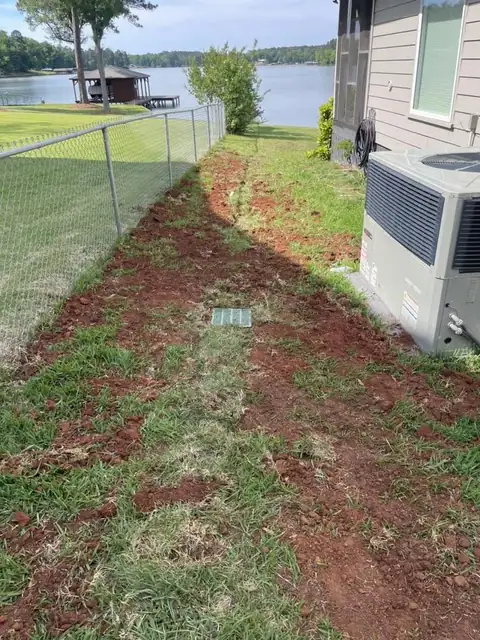
Our underground gutter project paired buried lines with catch basins. The project page shows the actual installation and the problem it was intended to address.
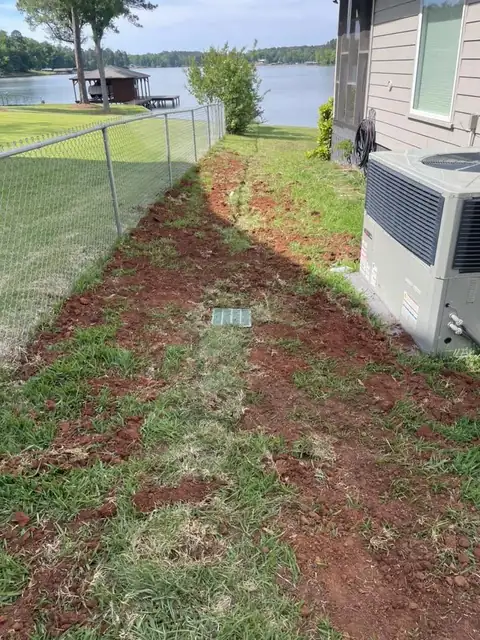 Project, Lake home, May 2026Underground gutter lines and catch basinsDownspouts tied into buried drain lines with catch basins, so roof water stops pooling beside the house.
Catch basins for surface collection
A catch basin provides an inlet where surface water can enter a drainage system. Discuss how the surrounding ground will direct water toward it and how the connected pipe will carry water onward. Placement matters: an inlet that sits above the wet area may miss the water you want it to collect.
Ask which grates and collection points you will need to keep clear of leaves, grass clippings and sediment after installation.
French drains for subsurface water
A French drain generally uses a gravel-filled trench and perforated pipe to collect water below the surface. It serves a different purpose from a solid line carrying roof runoff. Ask what evidence points to a subsurface problem and why this approach fits your site.
“French drain” is often used loosely in estimates. Have the contractor describe the proposed materials, placement, outlet and maintenance access so you know exactly what is being offered.
Grading and swales
Sometimes the project needs to change the path water takes across the ground. Regrading reshapes that path; a swale creates a shallow channel. Depending on the site, these can be combined with collection points and buried lines.
Discuss the finished appearance as well as the drainage plan. Ask how the work meets existing patios and walks, what disturbed areas will be restored, and whether the proposed route affects neighboring properties. The outlet and any applicable local requirements should be confirmed before work begins.
Why a project may need more than one approach
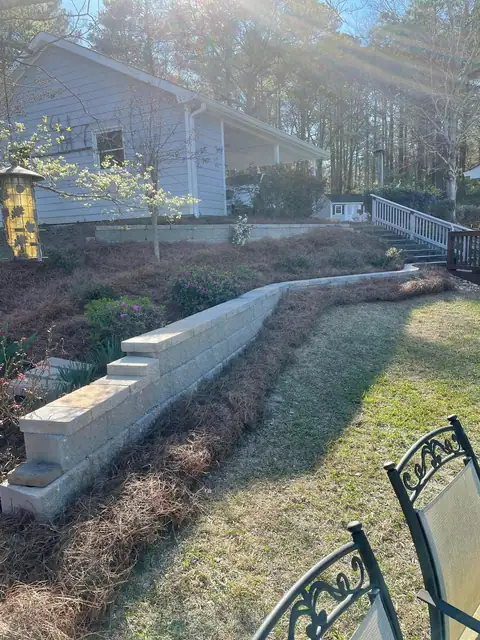
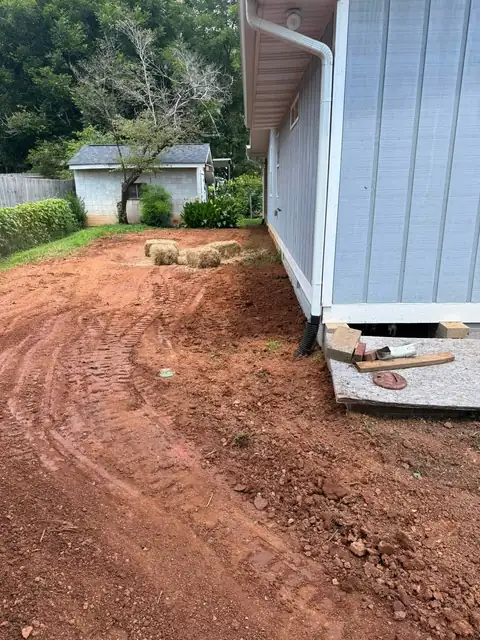
Our crawlspace drainage project combined regrading with buried gutter lines after rainwater was reaching the crawlspace. That is an example of addressing both roof runoff and the surrounding ground in one scope, rather than assuming every wet yard needs the same installation.
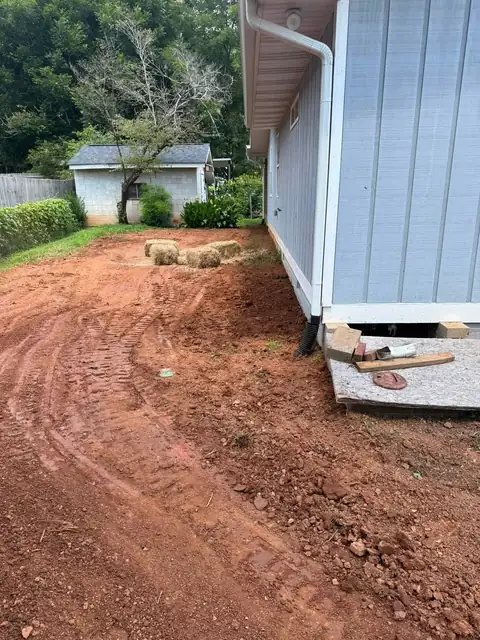 Project, August 2026Regrading a yard to keep water out of a crawlspaceAfter heavy rain was reaching the crawlspace, we regraded the yard away from the house and buried the gutters.
For your estimate, ask the contractor to walk through the water route from beginning to end. Where is it collected? How is it carried? Where does it leave the system? What happens to the lawn and beds along that route?
What to compare in a drainage estimate
A useful proposal should identify the problem being addressed, the planned work and the restoration afterward. Compare excavation, pipe and inlet scope, outlet work, access for maintenance, hauling and final grading. Check whether sod or other ground cover is included.
Send each contractor the same photos and description of the problem. If proposals recommend different approaches, ask each one to explain why. Understanding the reasoning is more useful than comparing a price per foot for systems that do different jobs.
Will new sod fix standing water?
New grass does not change an incorrectly shaped yard or relocate a downspout. Discuss drainage before sod installation and landscaping so that the work can be completed in a sensible order. Our new-build projects often coordinate underground gutters, final grading and sod.
Should drainage be handled before a new patio?
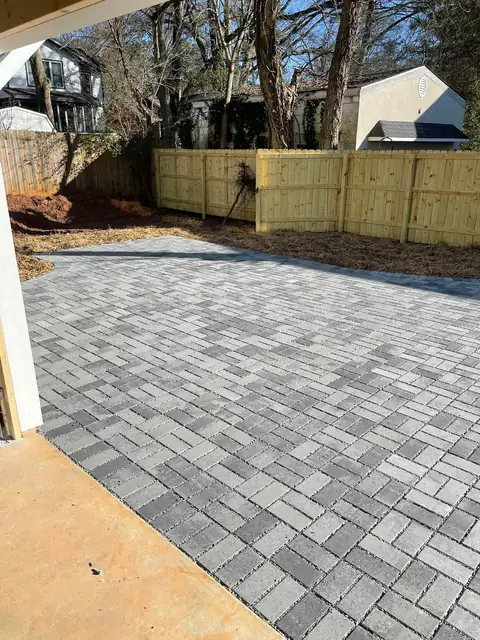
Bring it into the patio plan from the start. Sharing the proposed patio footprint and any future wall locations helps the contractor coordinate elevations and routes. See our paver patio planning guide for the other details to prepare.
If your yard stays wet or washes out after rain, send us your location and photos. Beamscapes can assess the site and provide a free estimate for the drainage and grading work it needs.